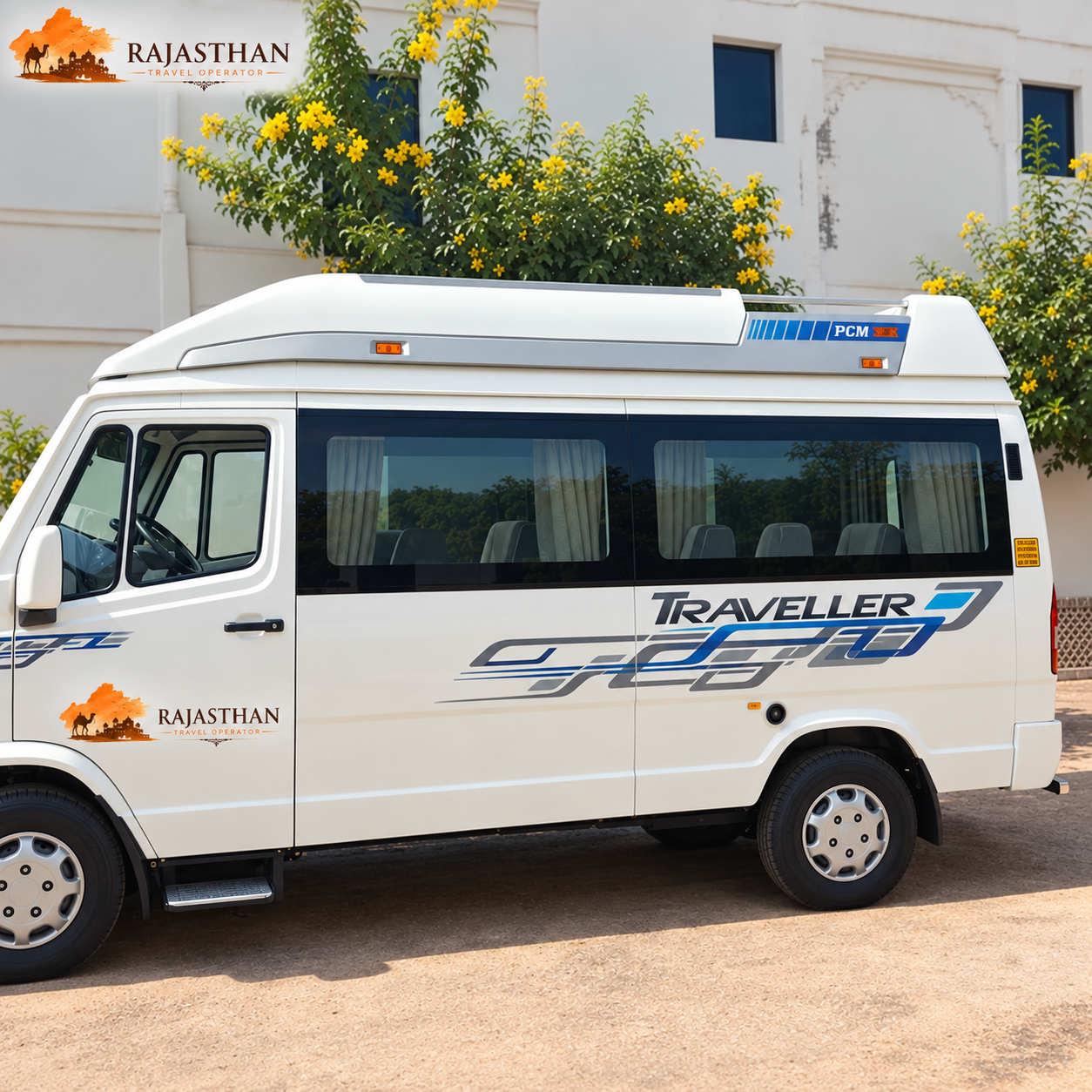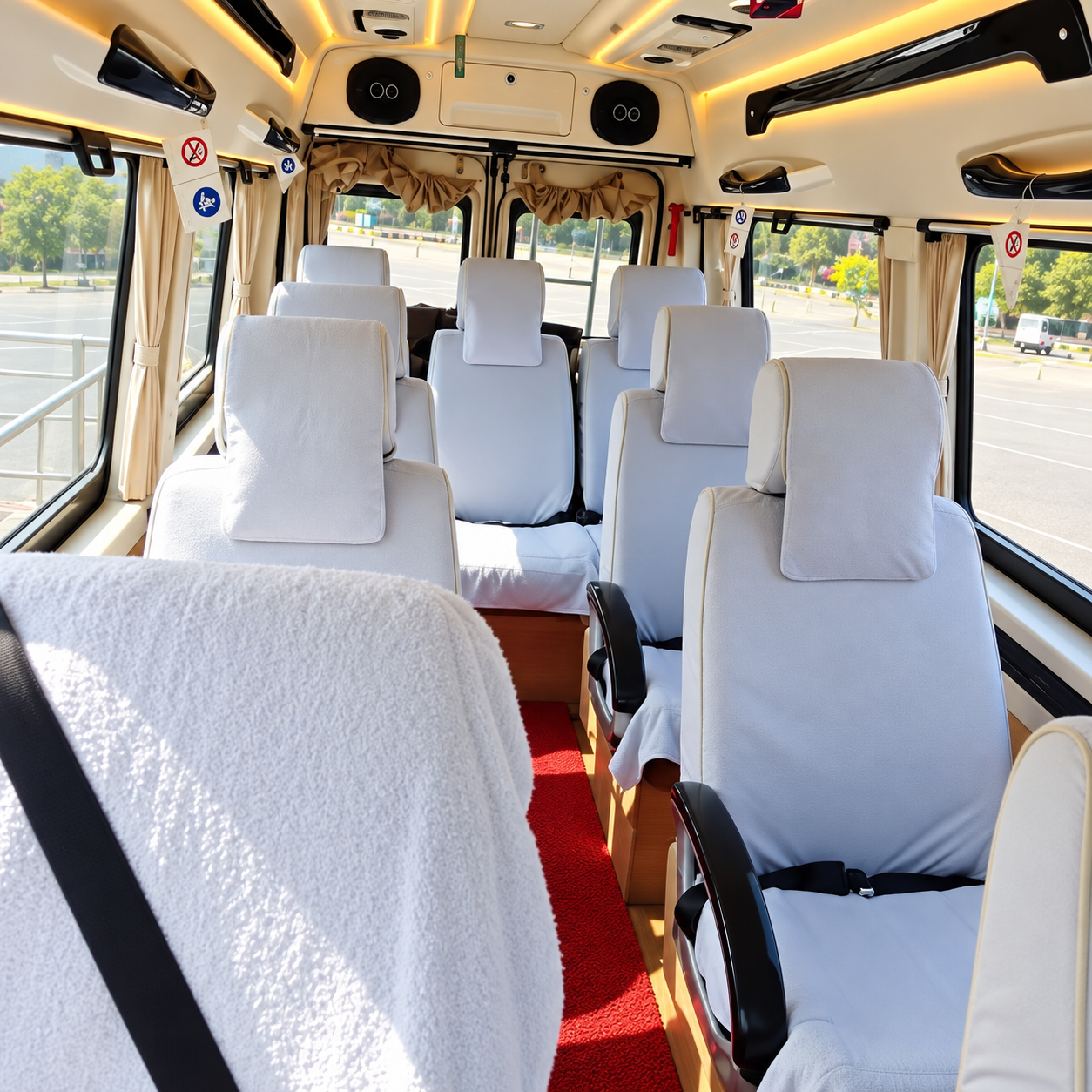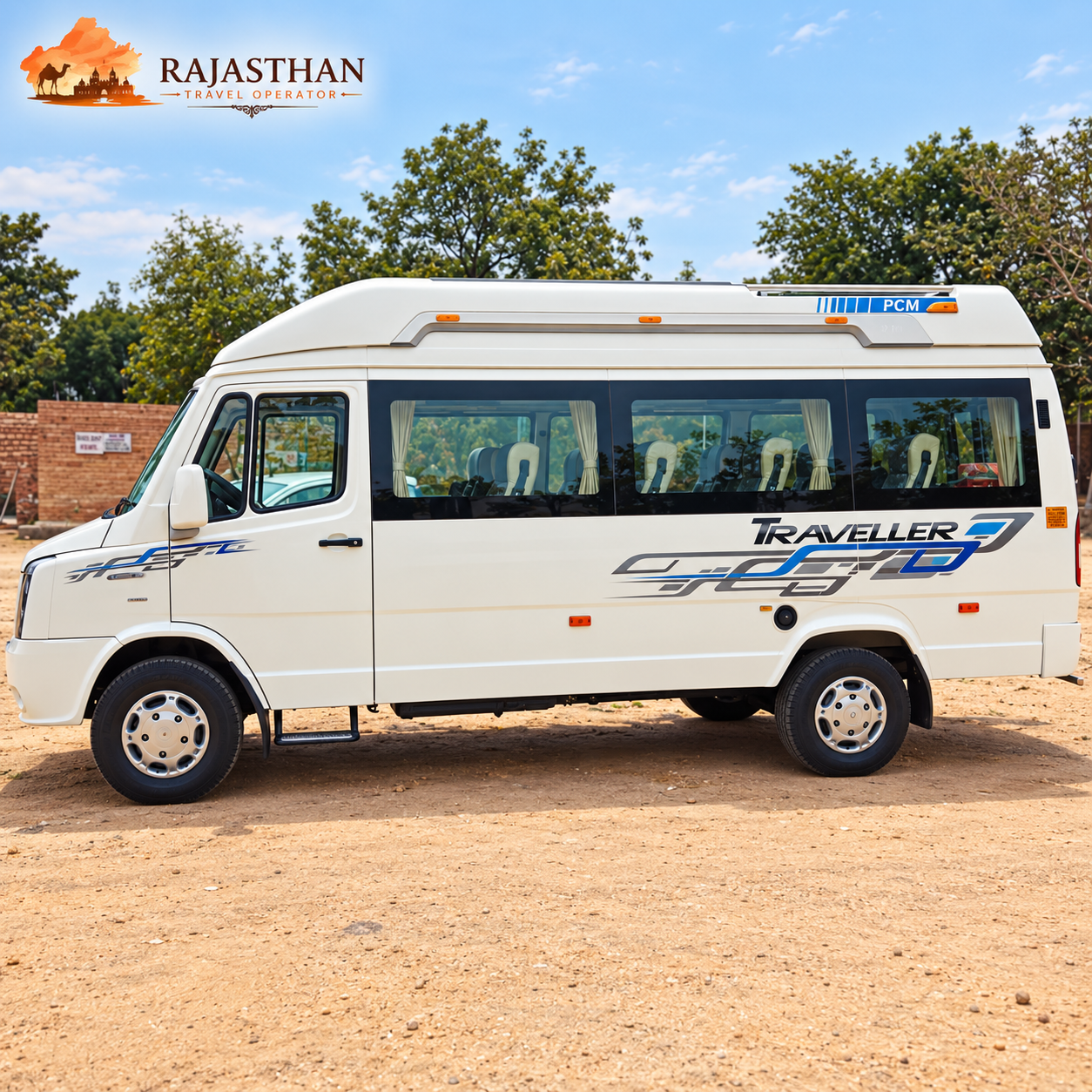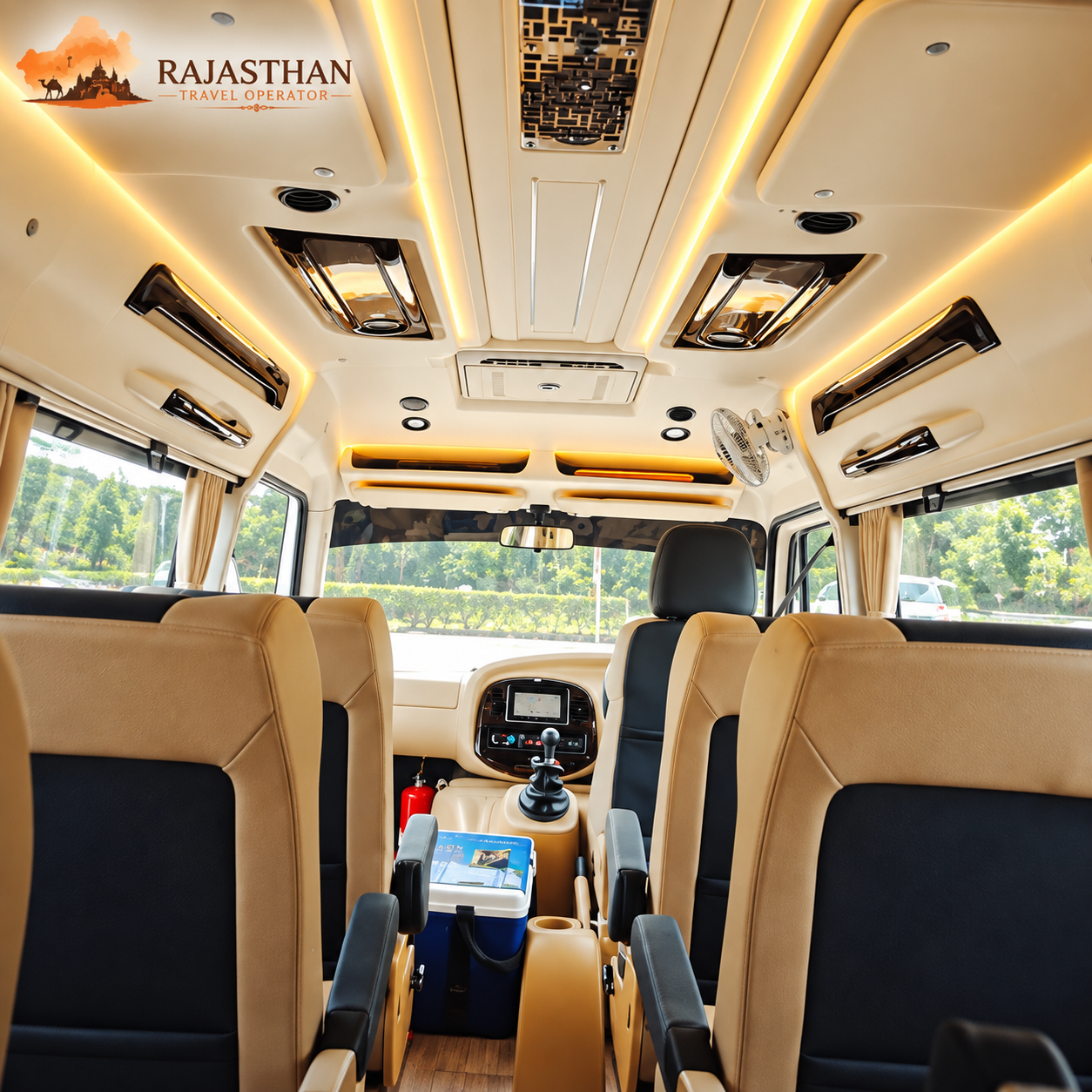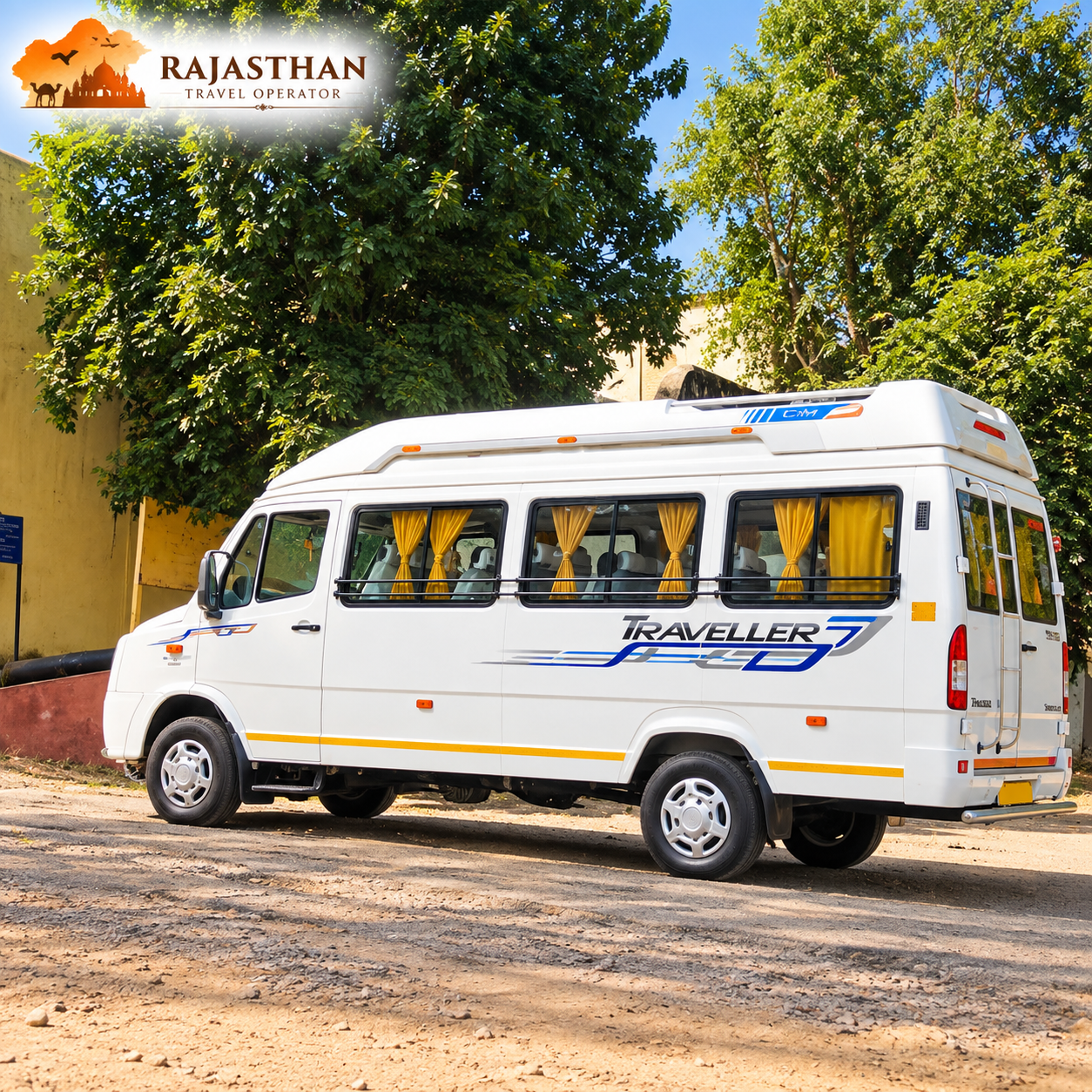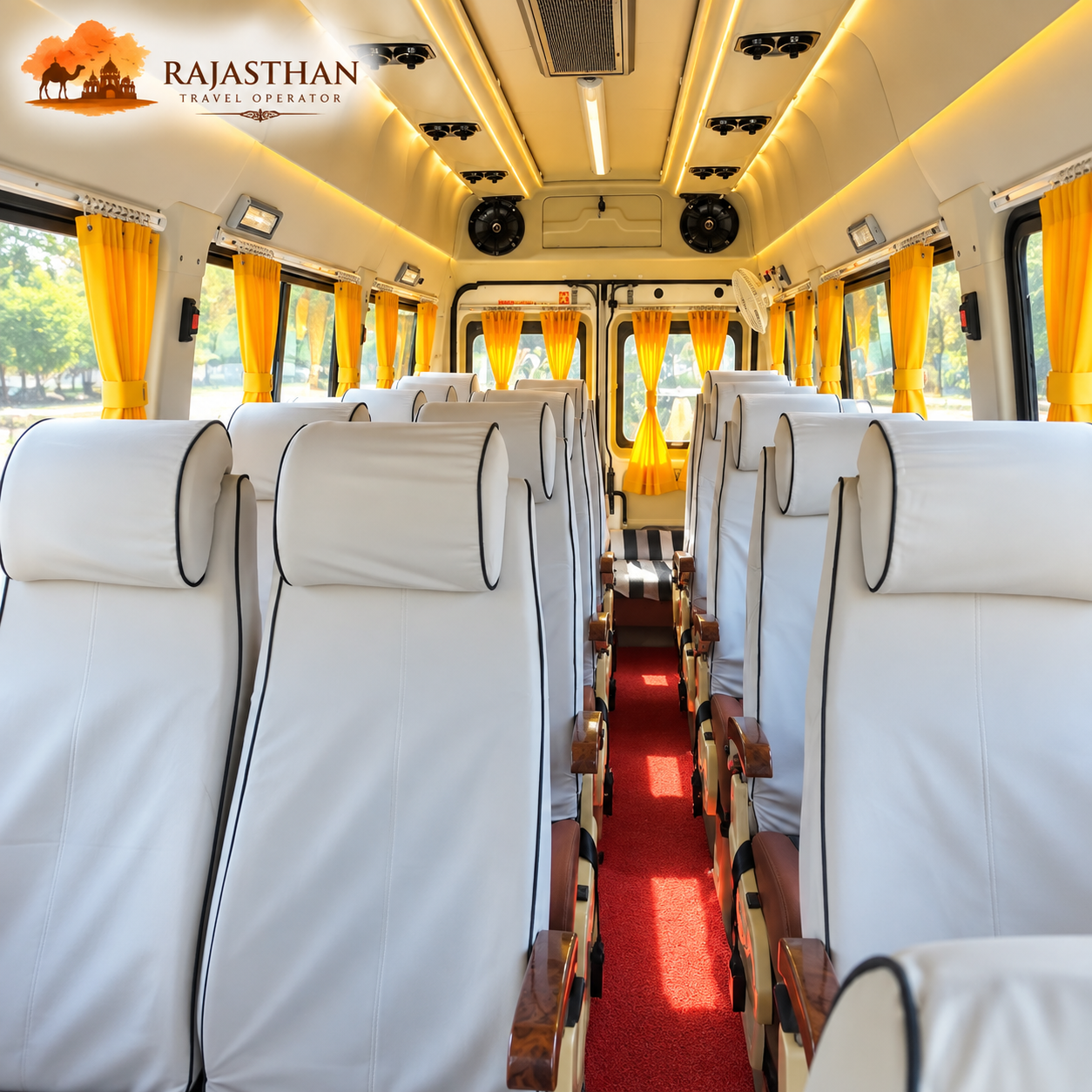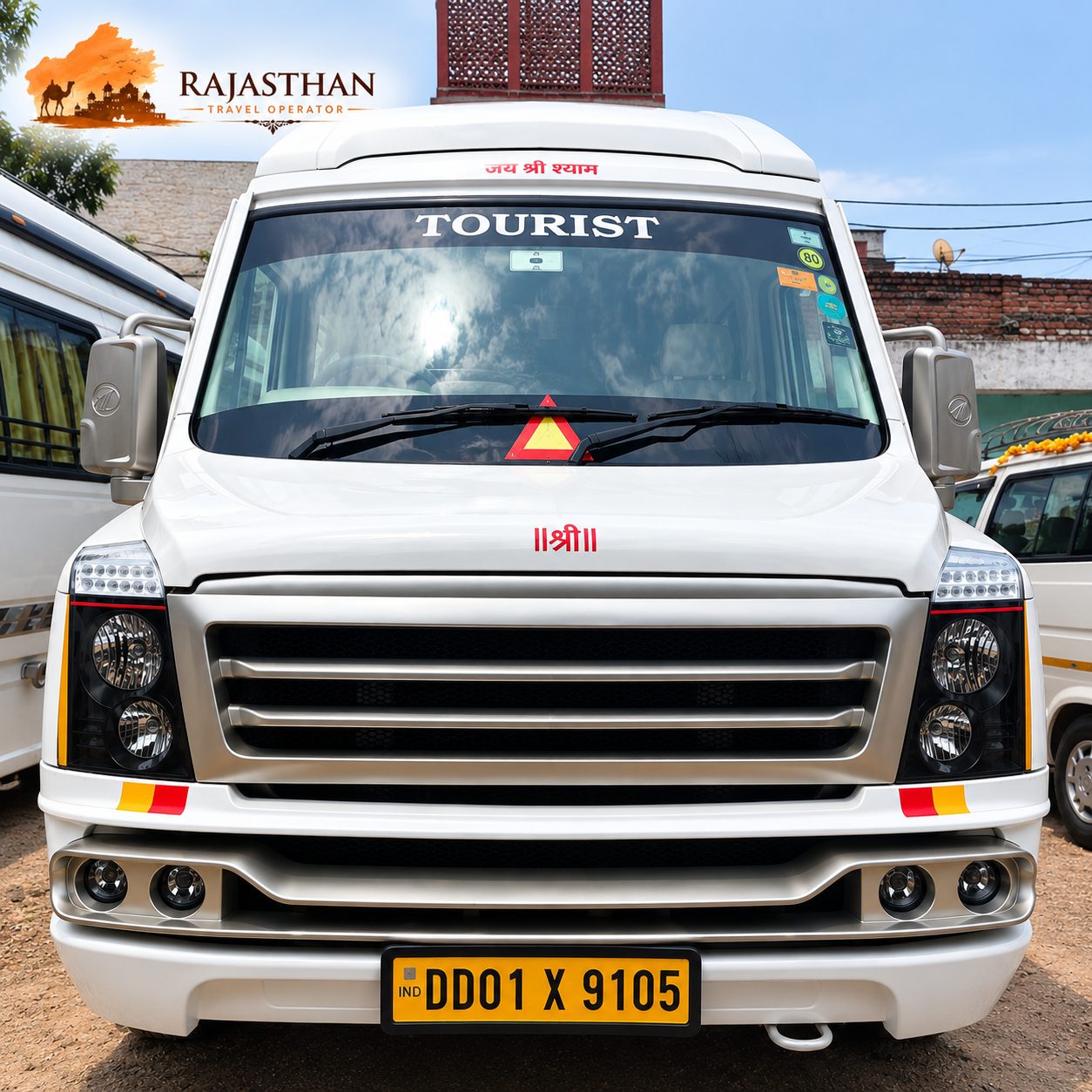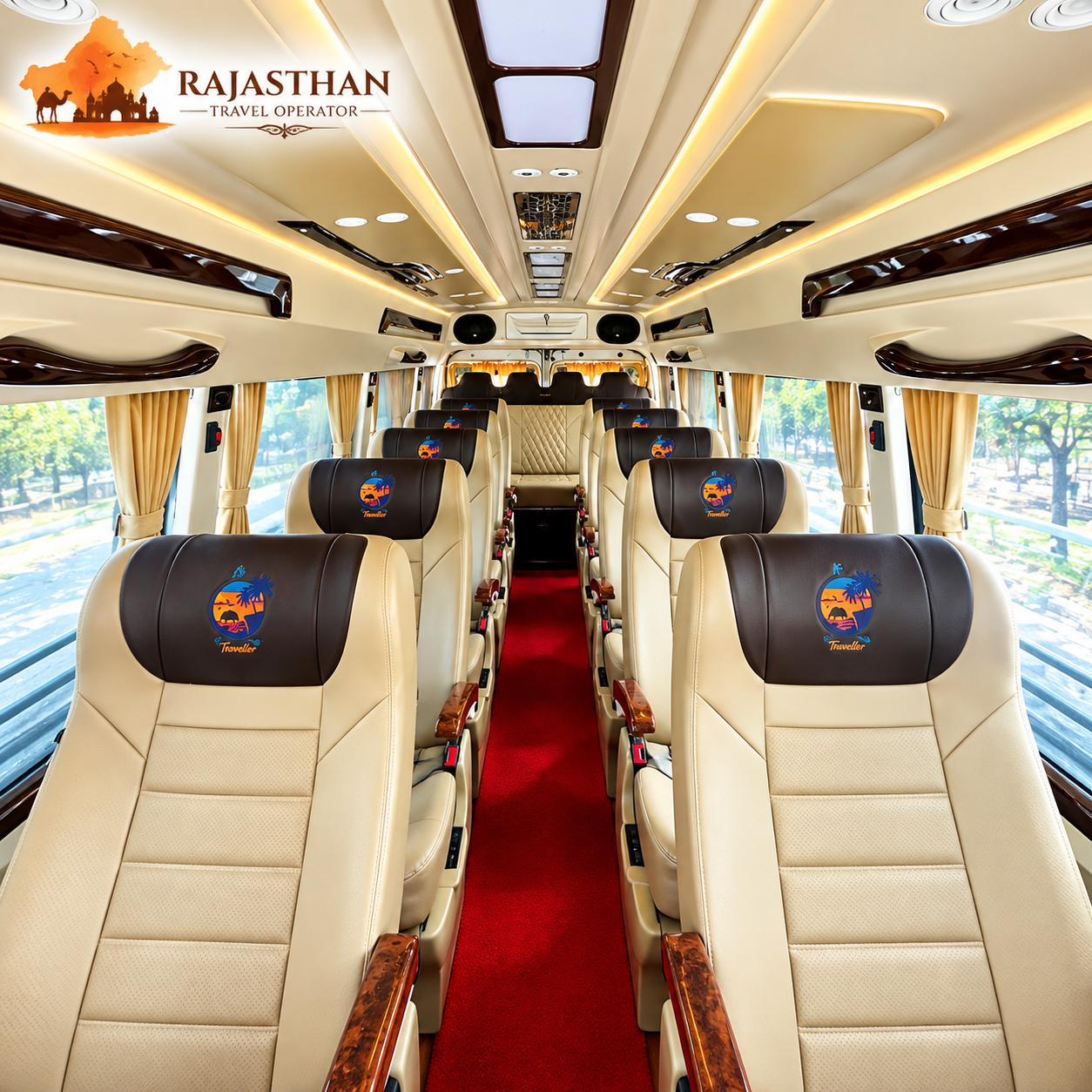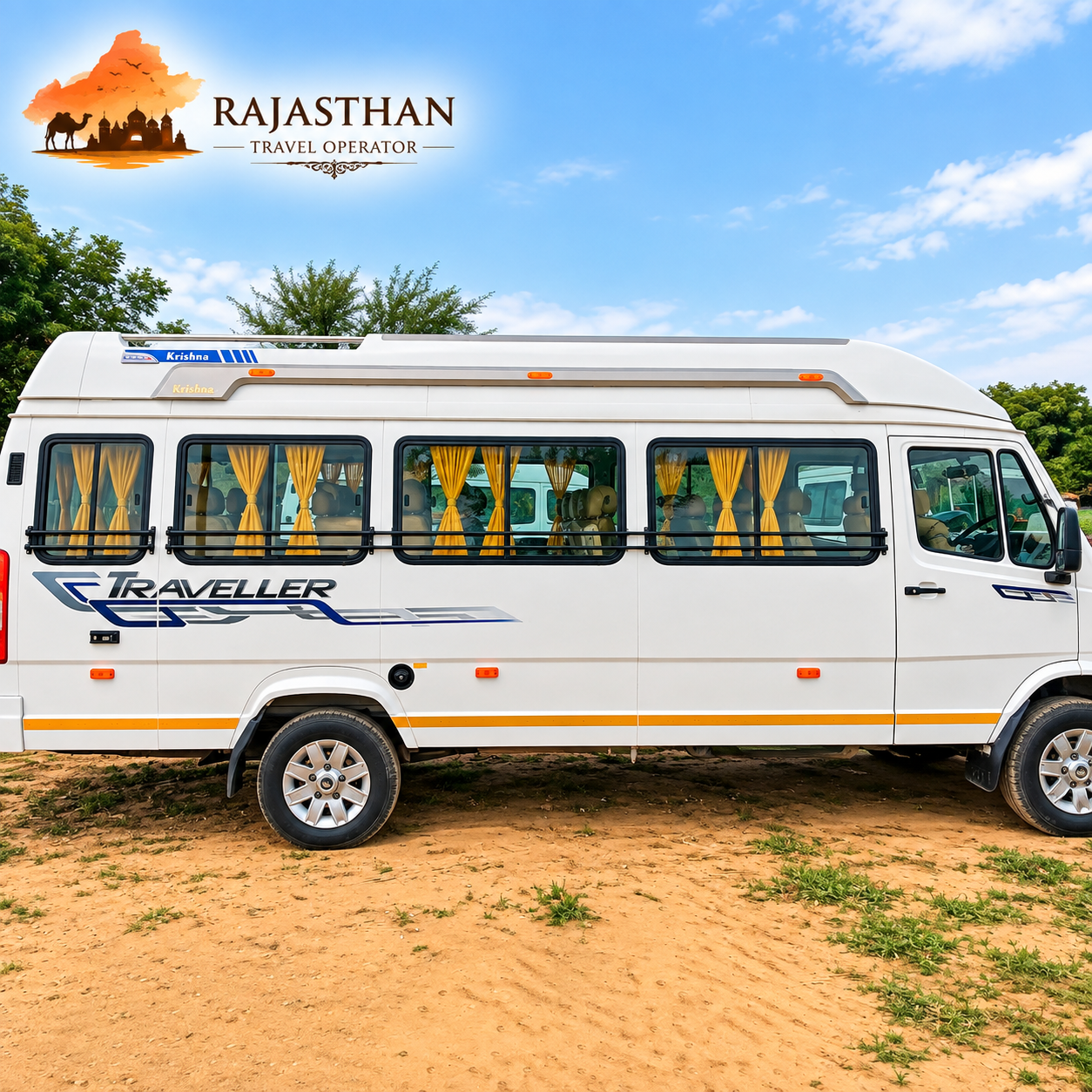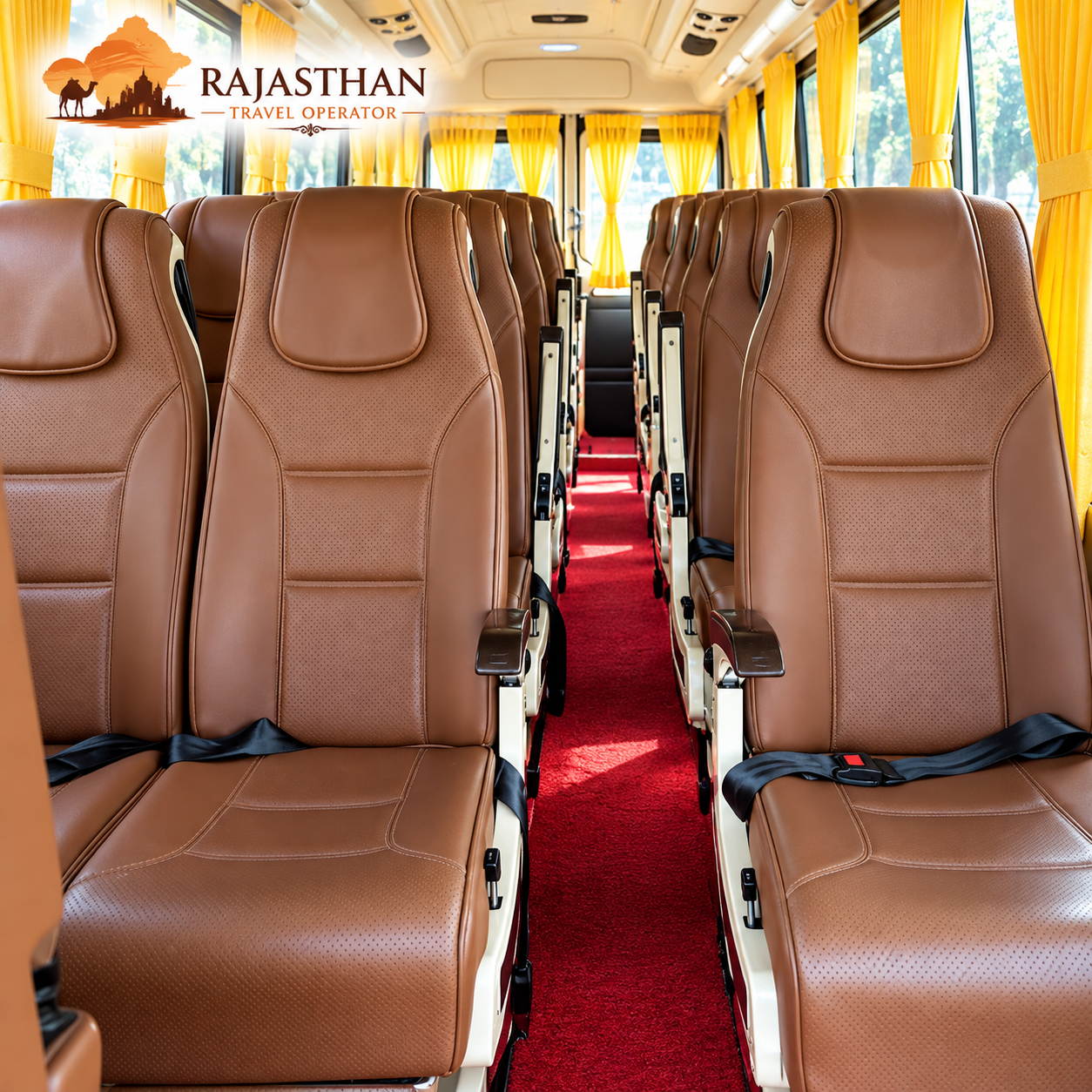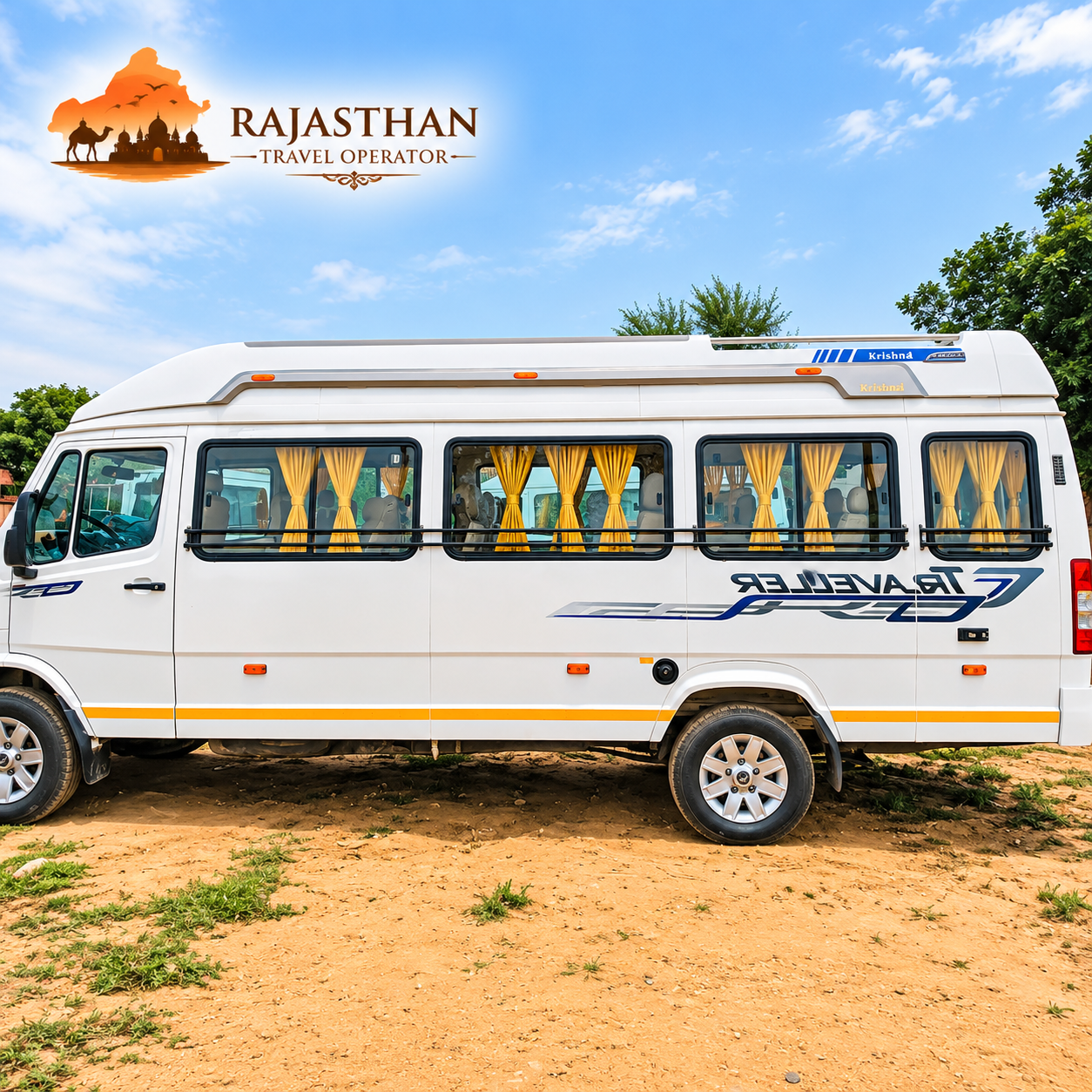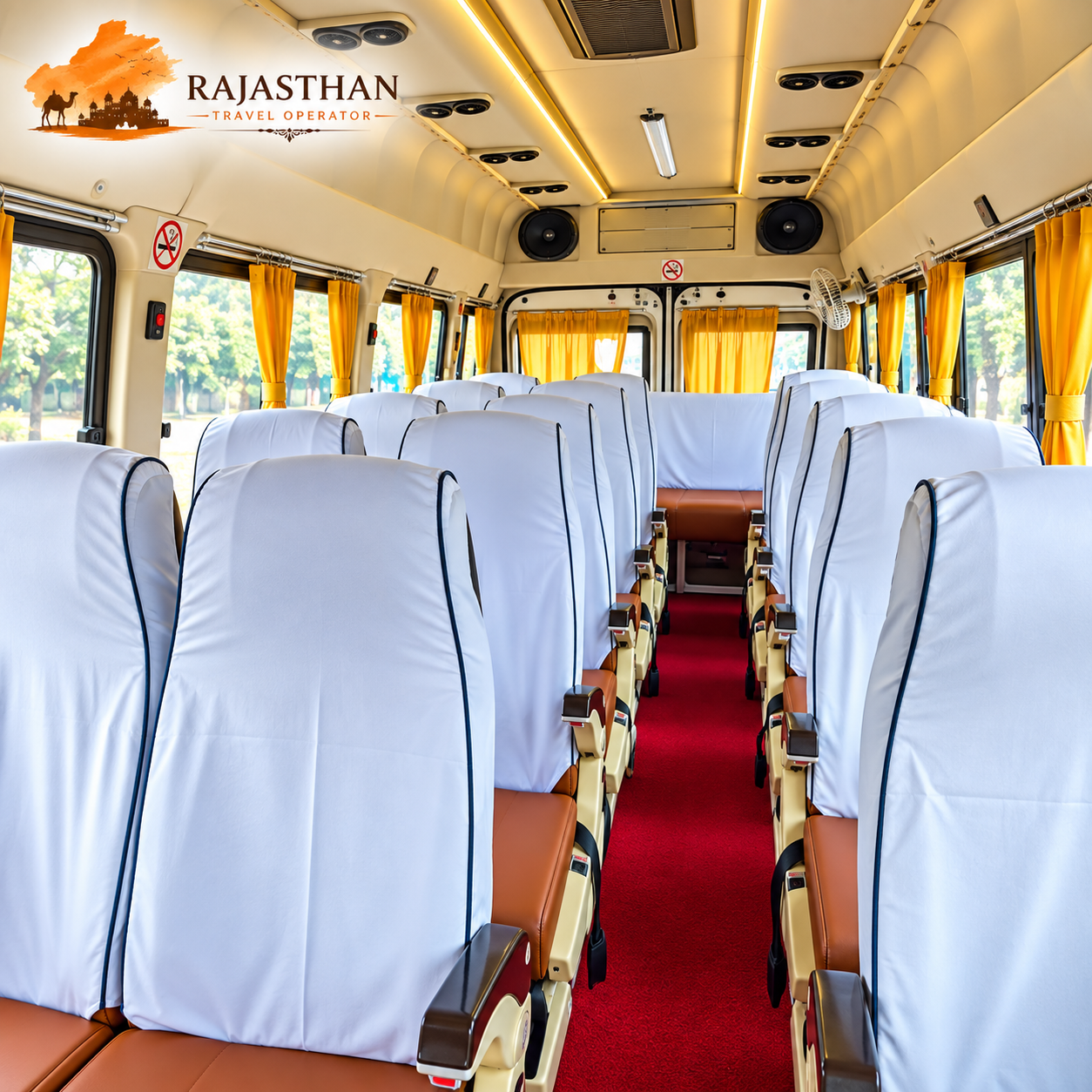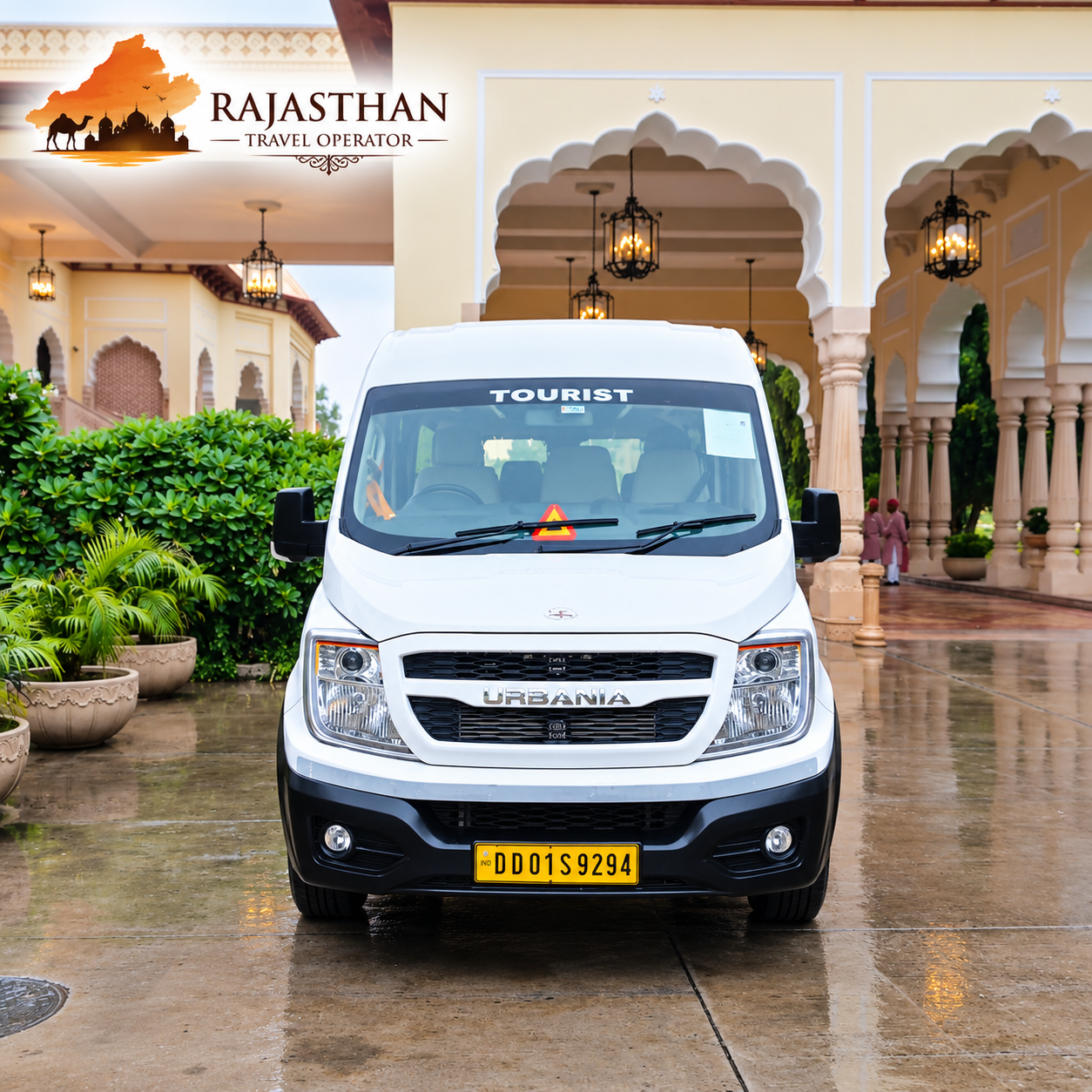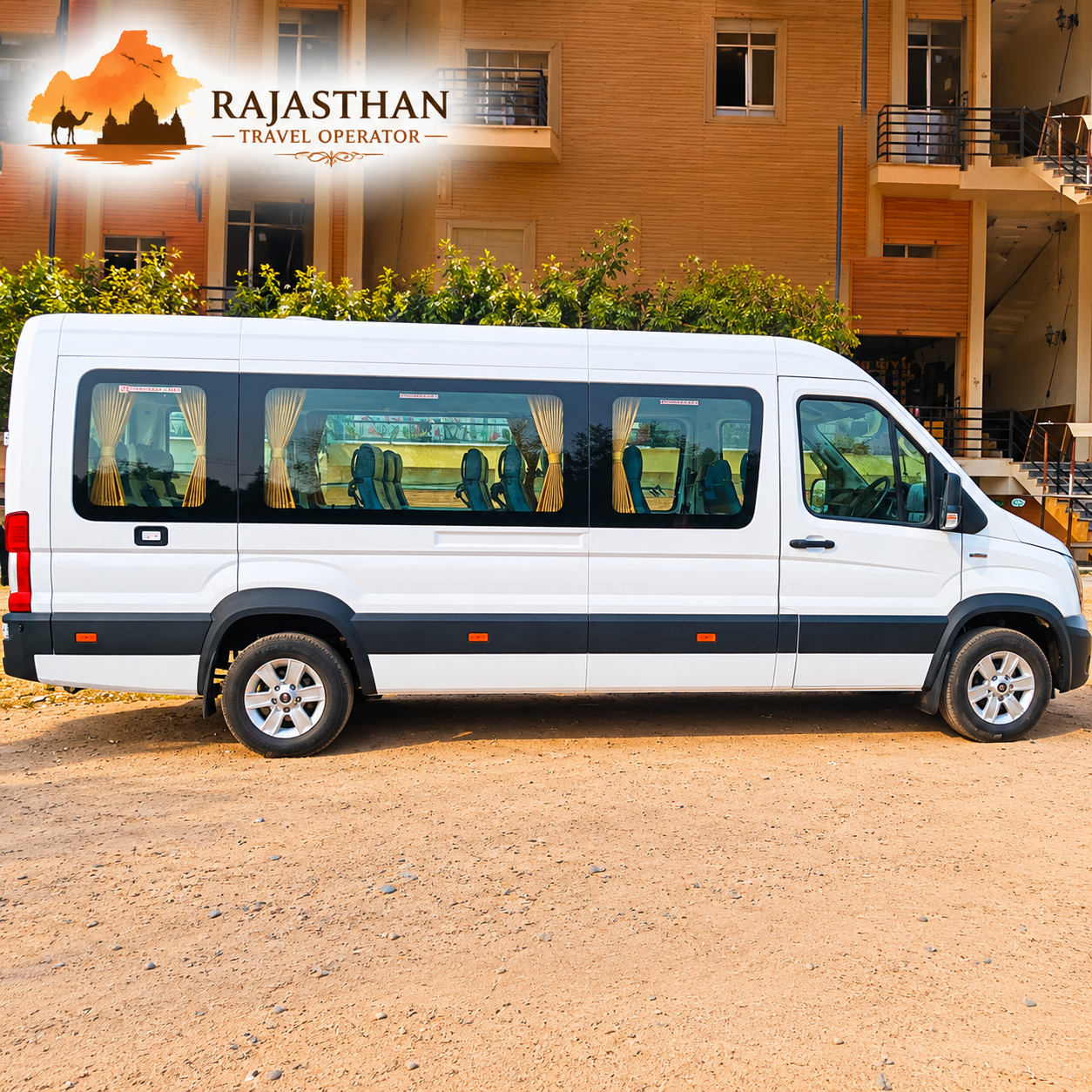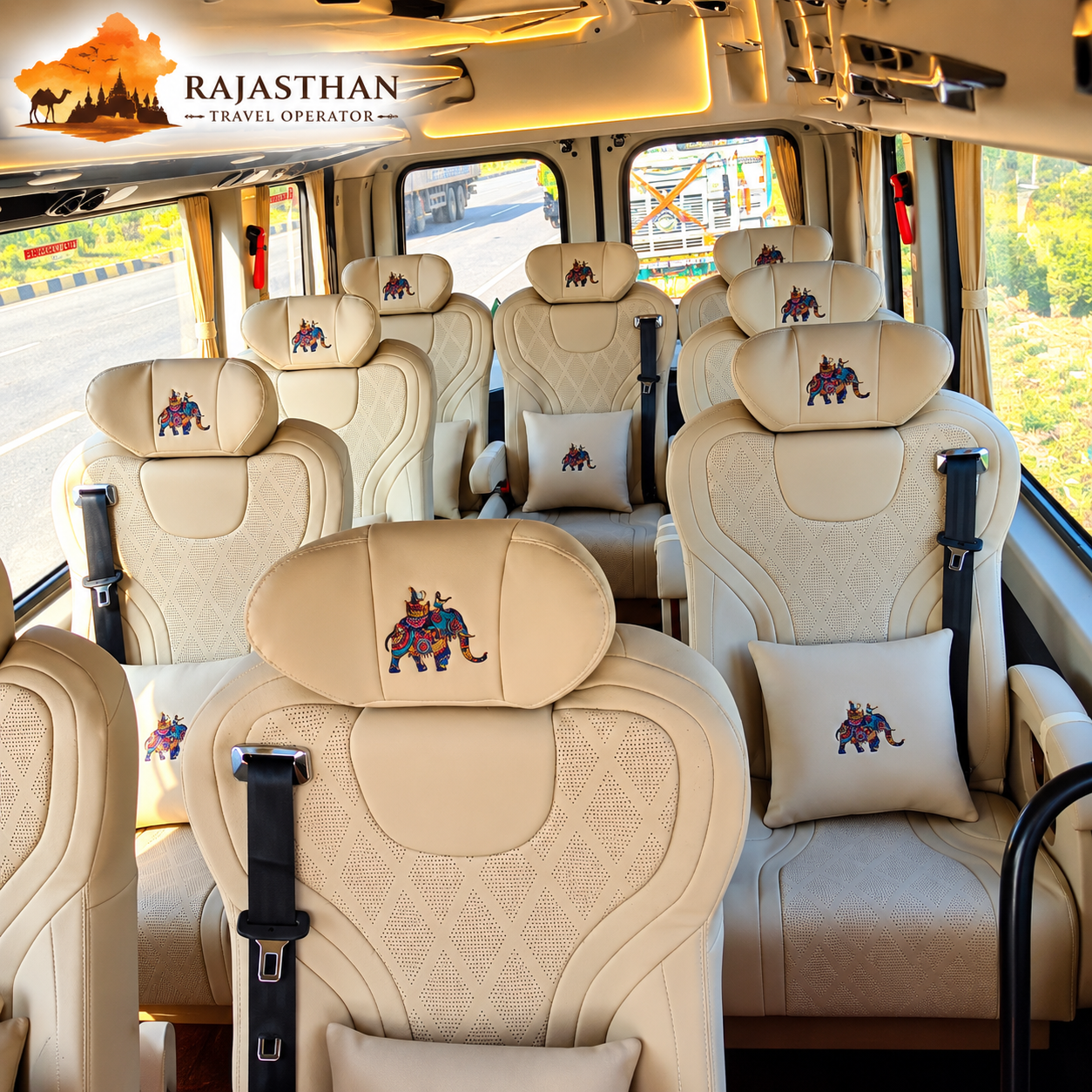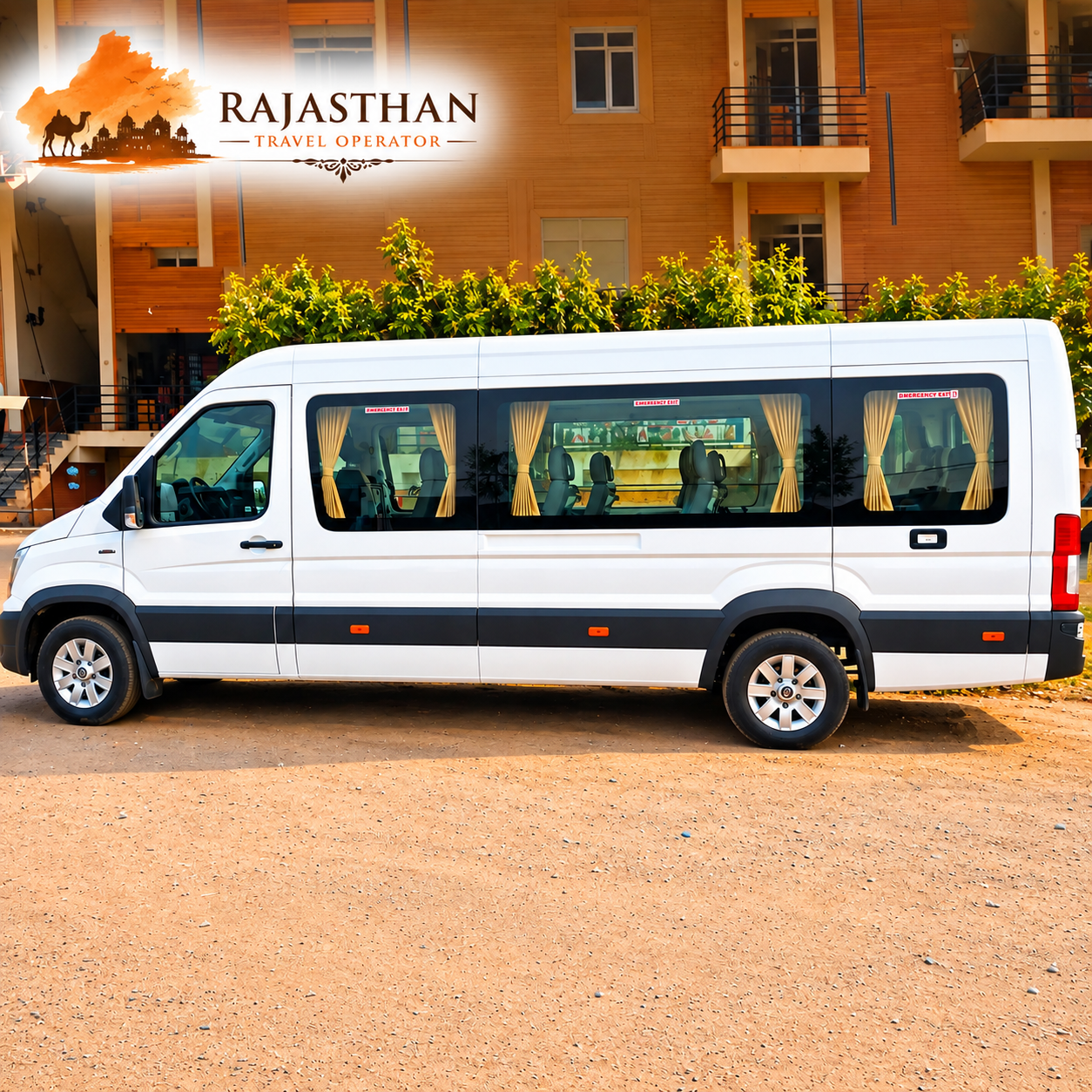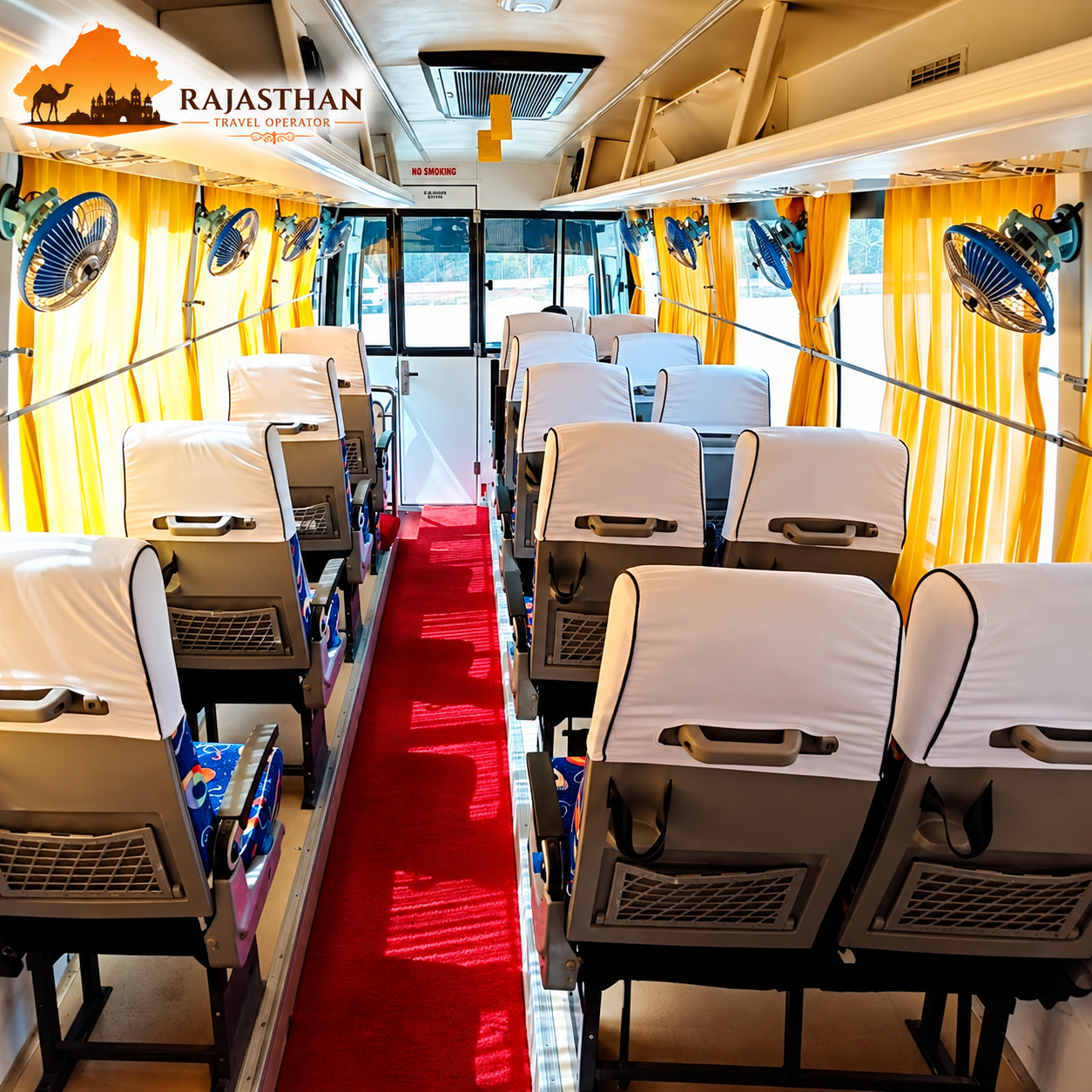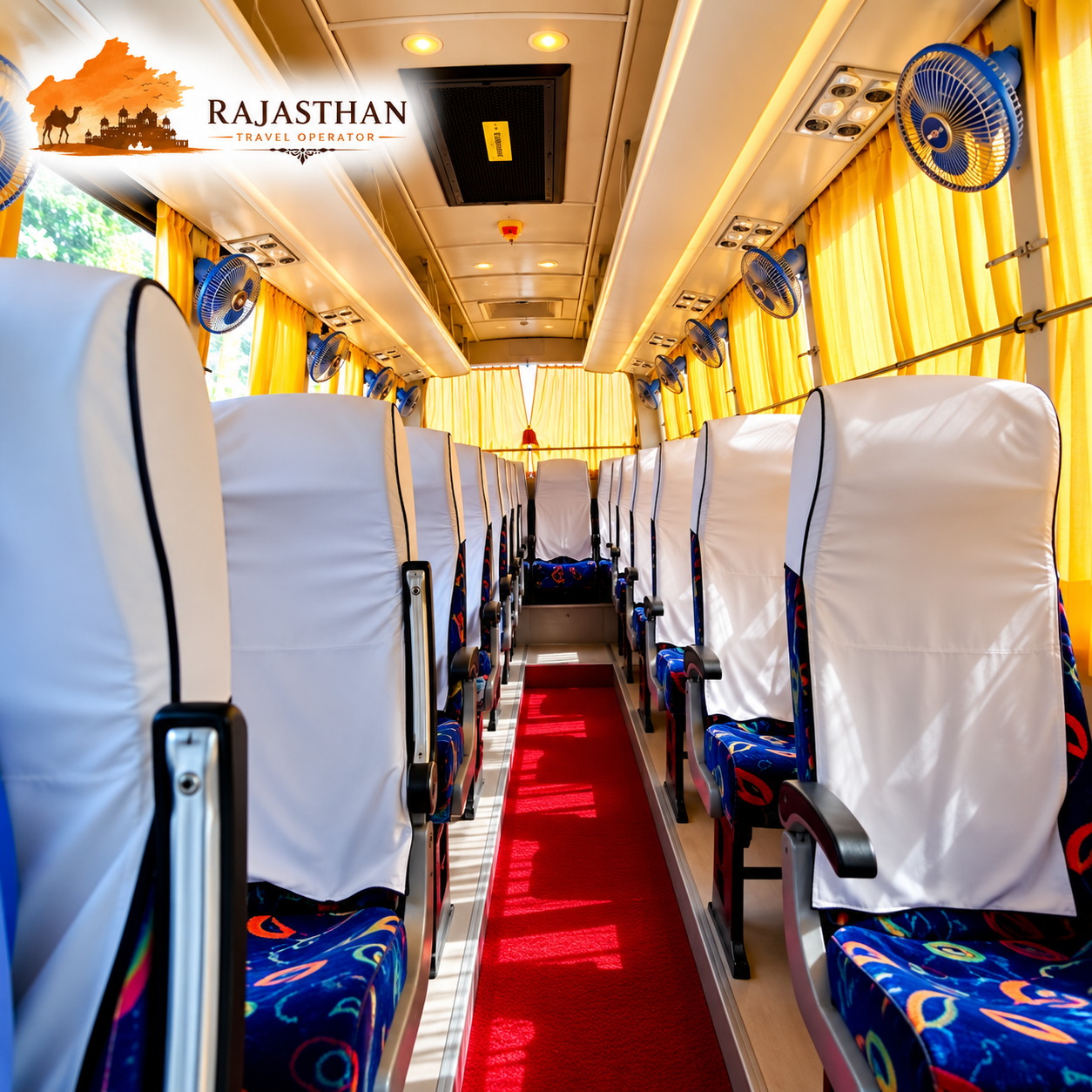
Most people choose a 20 seater the way they’d choose any vehicle: they count heads. Then the travel date gets close, and the vehicle they had in mind is already out on somebody else’s wedding.
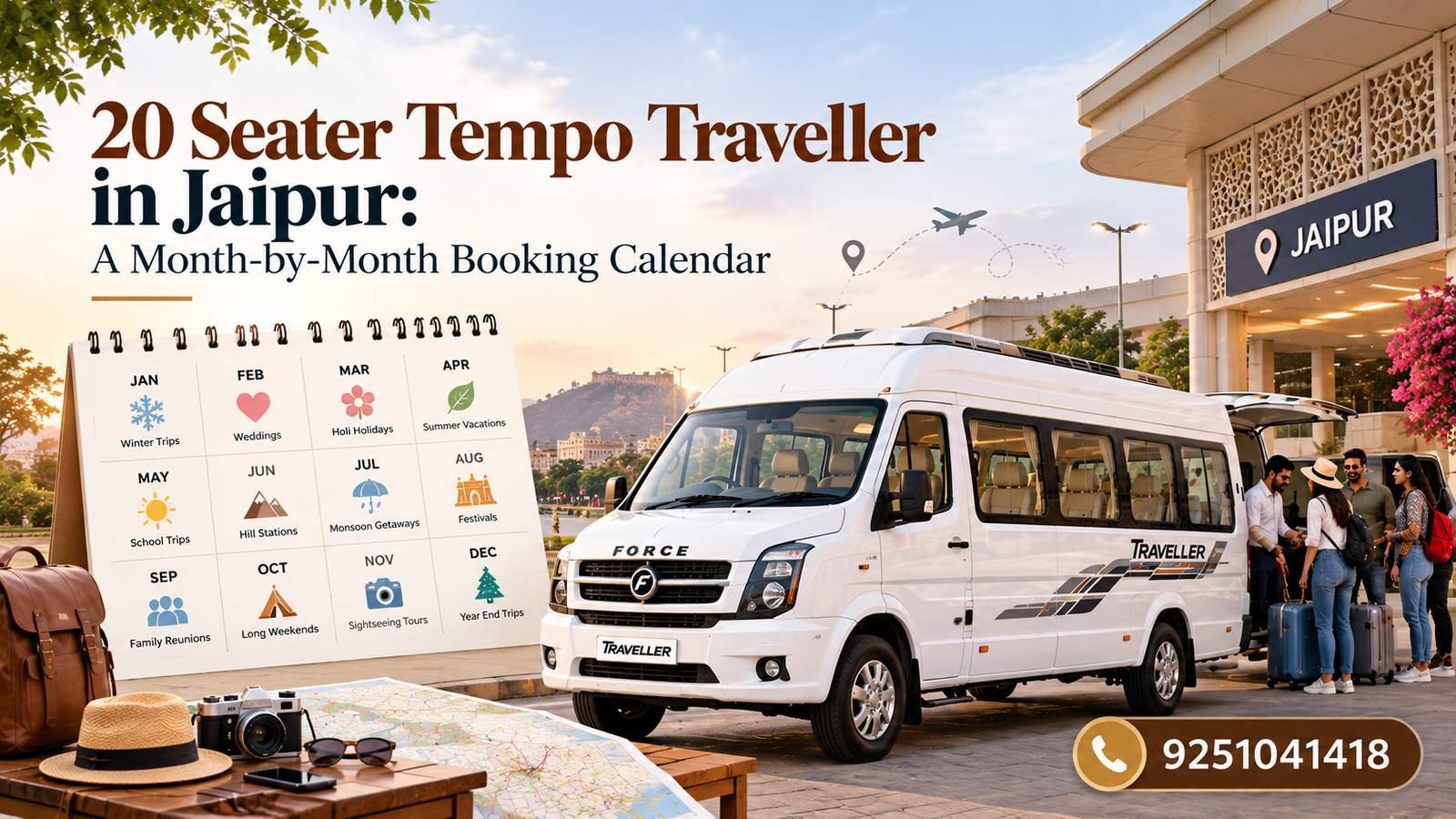
That’s the thing about the biggest tempo traveller in the range. Most Jaipur fleets run only a few of them, and every one of those few is wanted on the same handful of weekends. So when you book matters almost as much as what you book. This guide walks through the Rajasthan year in order and shows what each stretch does to availability, comfort and luggage. If you want to see where the 20 seater sits against every other size first, the tempo traveller on rent page lays out the whole range. Everything below is only about the calendar.
One caution before we start. A lot of Rajasthan’s busiest dates follow the Hindu lunar calendar, so they land on different days every year. Treat the months below as a pattern, and check this year’s actual dates before you commit to anything.
October and November: Festivals, Fairs and the Start of Wedding Season
This is the first real squeeze of the year. The monsoon lifts, the tourist season opens, Diwali arrives, and the Pushkar fair pulls in pilgrims and visitors from all over. Once the four-month Chaturmas period ends, wedding muhurats begin to open up again, and a 20 seater is exactly the vehicle a wedding family wants for moving guests between the station, the hotel and the venue.
What this means for you: the well-kept vehicles go first, and they go early. If your dates sit anywhere near Diwali, the fair window or the first big wedding dates, start asking three weeks ahead rather than one. If the 20 seater you wanted is gone and your final list is seventeen or fewer, the tempo traveller 17 seater is usually the first thing to look at, because it’s often built on a very similar long body.
December to February: Peak Tourists and Bulky Luggage
Cold weather brings the most pleasant sightseeing weather of the year, and the most crowded hotels and monuments. Foreign and domestic tourists fill the Jaipur–Jodhpur–Udaipur and Golden Triangle routes, and fairs and festivals keep adding road traffic. Wedding muhurats continue through much of this stretch too.
Here is something people forget: winter luggage is much heavier than summer luggage. Twenty people with jackets, shawls, blankets and thermals carry noticeably more volume than twenty people in cotton. That makes the roof carrier on a standard 20 seater close to essential in these months, and it’s the season where the Urbania tempo traveller platform’s lack of any roof storage hurts most. In most Jaipur fleets that platform stops at sixteen seats anyway, so at twenty it isn’t really on the table.
The other winter issue is fog. Early-morning fog on the highways toward Agra and Delhi can slow a Golden Triangle day considerably, so plan later starts and don’t schedule anything time-critical, like a flight or a timed entry, right at the end of a long driving leg.
March and April: Holi, Gangaur and the First Real Heat
Spring is a mixed bag. Holi and Gangaur bring their own festival crowds and their own road closures in the old parts of towns. Exams end, so school and college groups start planning trips. Wedding dates thin out but don’t vanish. And somewhere in these weeks the temperature quietly stops being pleasant.
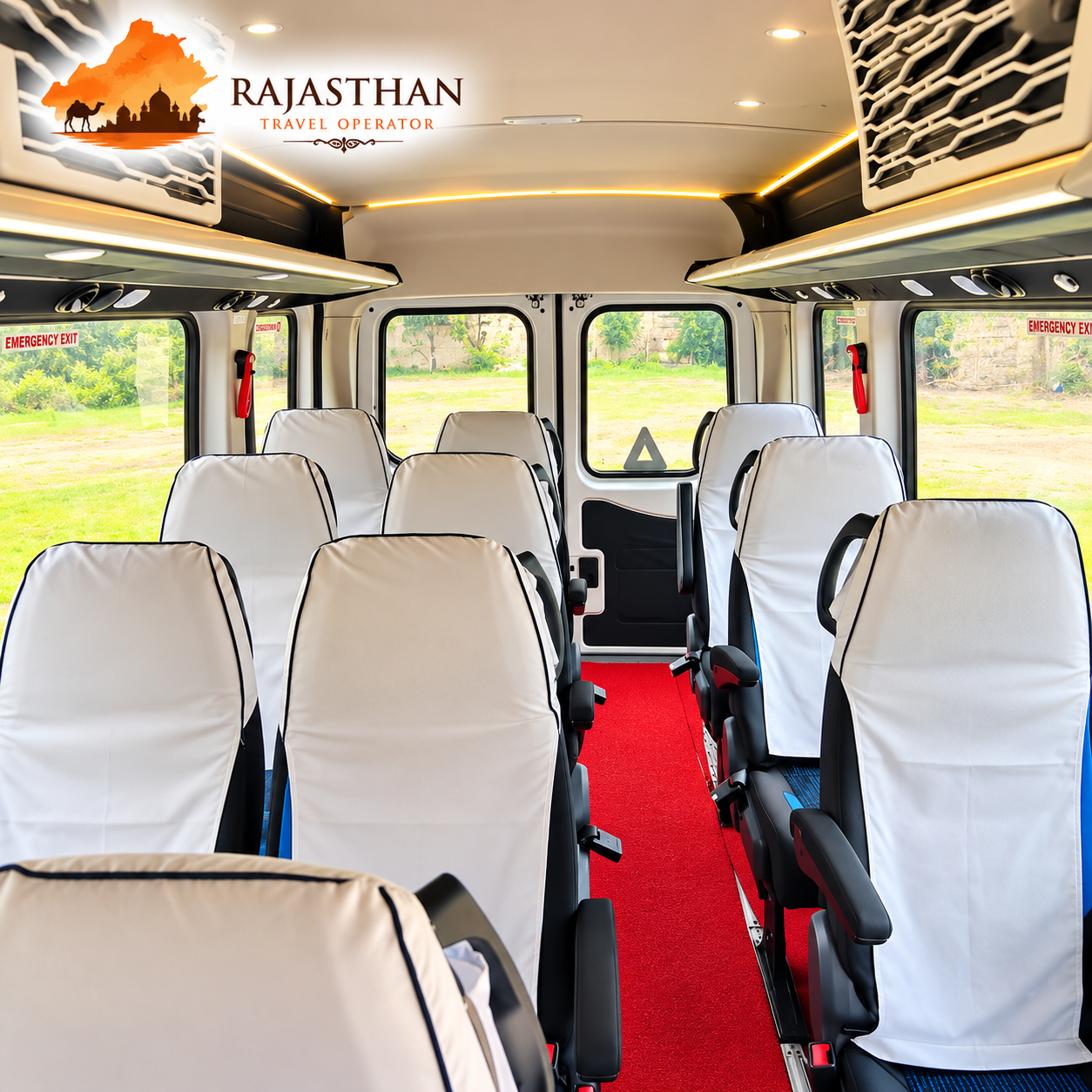
This is the point where AC stops being a nice extra and starts being the main comfort feature. With twenty people in one long cabin, a dashboard blower simply can’t cool the back rows evenly, and it’s exactly the gap between a basic vehicle and a luxury tempo traveller trim with roof-mounted AC. If your trip falls from mid-March onward, ask about the AC type before you ask about anything else.
May and June: Extreme Heat and School-Holiday Reunions
Rajasthan in May and June is a serious test for any vehicle. Daytime temperatures regularly cross 40°C, and the holidays bring exactly the trips that need a 20 seater: big extended families, reunions, and pilgrim groups travelling together while the children are out of school.
Practical advice for these two months:
- Start early. Leaving at 5 or 6 in the morning means the hardest driving happens before the worst of the heat.
- Ask about tyres and cooling as well as AC. A vehicle that’s fine in December can struggle in June if its maintenance has been skipped.
- Plan a proper break through the middle of the day rather than driving straight through.
There’s one genuine upside. Summer luggage is light. If you can realistically bring the group down to sixteen, the 16 seater Urbania becomes worth a look, since the usual objection to it, no roof carrier, matters far less when everyone’s bags are small. The top trim of that platform is described on the luxury Urbania in Jaipur page. It only makes sense if the headcount really can come down, so don’t force it.
July to September: Monsoon and the Quiet Months
This is the slowest stretch for most operators. Tourists stay away, hotels drop their rates, and there are simply more free vehicles on the road. If your dates are flexible, this is when you have the most room to choose a vehicle and to talk about the price.
The trade-offs are real, though. Wet roads and ghat sections, such as the climb toward Mount Abu or the hills around Kumbhalgarh, ask more of both the driver and the vehicle, and it’s worth requesting a newer vehicle with good tyres. The monsoon is also pilgrim season. Teej celebrations and the big fair traffic toward Ramdevra put a lot of buses and cars on the road, and elderly passengers make up much of it.
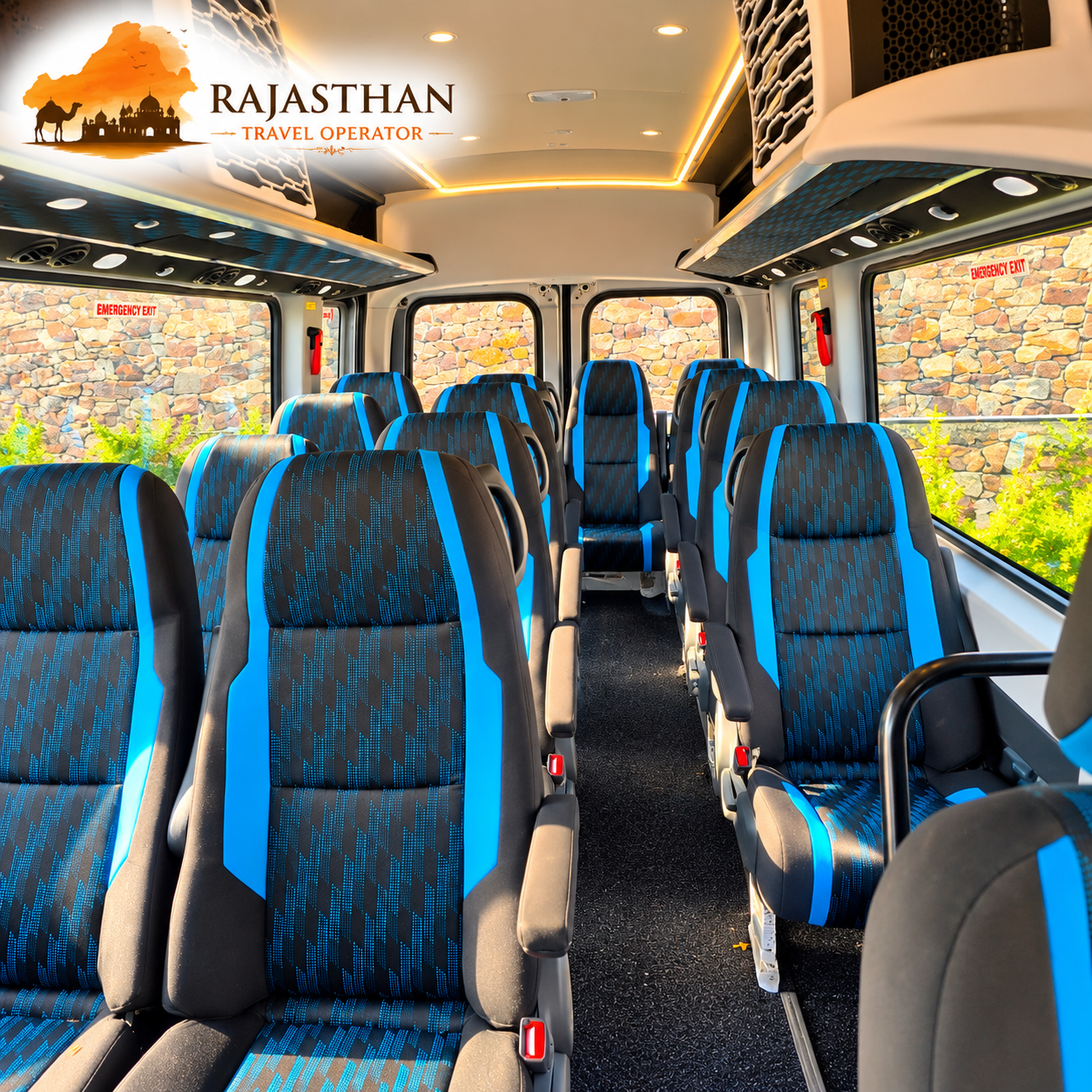
If part of your group is elderly, don’t convert the whole body to wide individual seating, because on a body this size that would cut your headcount too far. Ask instead whether a few front seats can be upgraded. The Maharaja seat tempo traveller page explains how that layout works and what it costs you in seat count.
The Whole Year at a Glance
| Period | Demand for a 20 seater | Main thing to plan around | Rough lead time |
|---|---|---|---|
| Oct–Nov | Very high | Diwali, fairs, wedding season opening | 3 weeks or more |
| Dec–Feb | High | Bulky winter bags, morning fog | 2–3 weeks, longer near muhurats |
| Mar–Apr | Moderate to high | Holi and Gangaur dates, rising heat | About 2 weeks |
| May–Jun | Moderate, spiking on wedding dates | Extreme heat, early starts | About 2 weeks |
| Jul–Sep | Low to moderate | Wet roads, pilgrim traffic | About 1 week |
Treat the lead times as a rough guide, not a guarantee. A festival or wedding date can turn a quiet week into a busy one overnight.
When the 20 Seater Is Already Booked
It happens, even to people who plan well. You have a few honest options, and each comes with a cost you should know about.
Move down to a 17 seater. Only works if the list really is seventeen or fewer.
Split across two vehicles. Two 10 seater tempo traveller bookings cover twenty people, and it can work for a group that naturally divides into two parties. You’ll pay for two drivers, two sets of tolls and two night halts, and you’ll have two vehicles to keep in sync on the road.
Use a mixed pair. A 12 seater hire in Jaipur plus a smaller vehicle is a common answer for a wedding with uneven arrival times.
Or shift the date. If your dates are truly flexible, moving a trip by even a week can change what’s available.
For a group of exactly sixteen, there’s a simpler fix: the 16 seater tempo traveller covers you, and it’s often a lot easier to find on short notice than a 20.
Three Questions That Come Up in Every Season
Is there a cheap month? Usually the monsoon, because demand drops and operators have more free vehicles and more room to negotiate. But cheaper doesn’t mean better. You give up some comfort and some road conditions for that saving, and the price isn’t guaranteed.
Can I book far ahead for a wedding? If the family has fixed the muhurat, many operators will take an early advance to hold a vehicle for that date. Get the refund and rescheduling terms in writing first, because wedding dates do move.
What if my trip spans two seasons? Plan for the harder one. A trip that runs from late February into March should be packed for winter bulk and equipped for spring heat.
Where This Leaves You
The 20 seater is the least flexible vehicle in the fleet, so it rewards early planning more than any other size does. Work out which part of the year you’re travelling in, match your booking window to it, and check the AC and the roof carrier against that season’s biggest problem, whether that’s the cold-weather luggage or the summer heat. Do that before you compare quotes, and the vehicle decision gets a lot simpler.